AskUserQuestionTool Changed How I Use Claude Code
The easiest workflow upgrade you can make in Claude Code as a coding agent operator is to use the crap out of AskUserQuestionTool.
Claude Code has a few ways to gather context in order to complete its task:
- Static context from CLAUDE.md, skills, commands, and other CC features
- Dynamic context via WebSearch
- Dynamic context via reading files and exploring the project
But people forget about one of the best sources of context.... YOU!!!
Build me a habit tracker app with:
- Daily habit check-ins
- Weekly progress view
- Streak tracking
- Reminder notifications

Interview me with 3 questions via AskUserQuestionTool before starting.
AskUserQuestionTool is the best way to gather context from the user because:
- Claude knows what gaps in context it has, and can ask you the questions it needs
- It gives you default answers to pick from which helps speed up the context gathering process
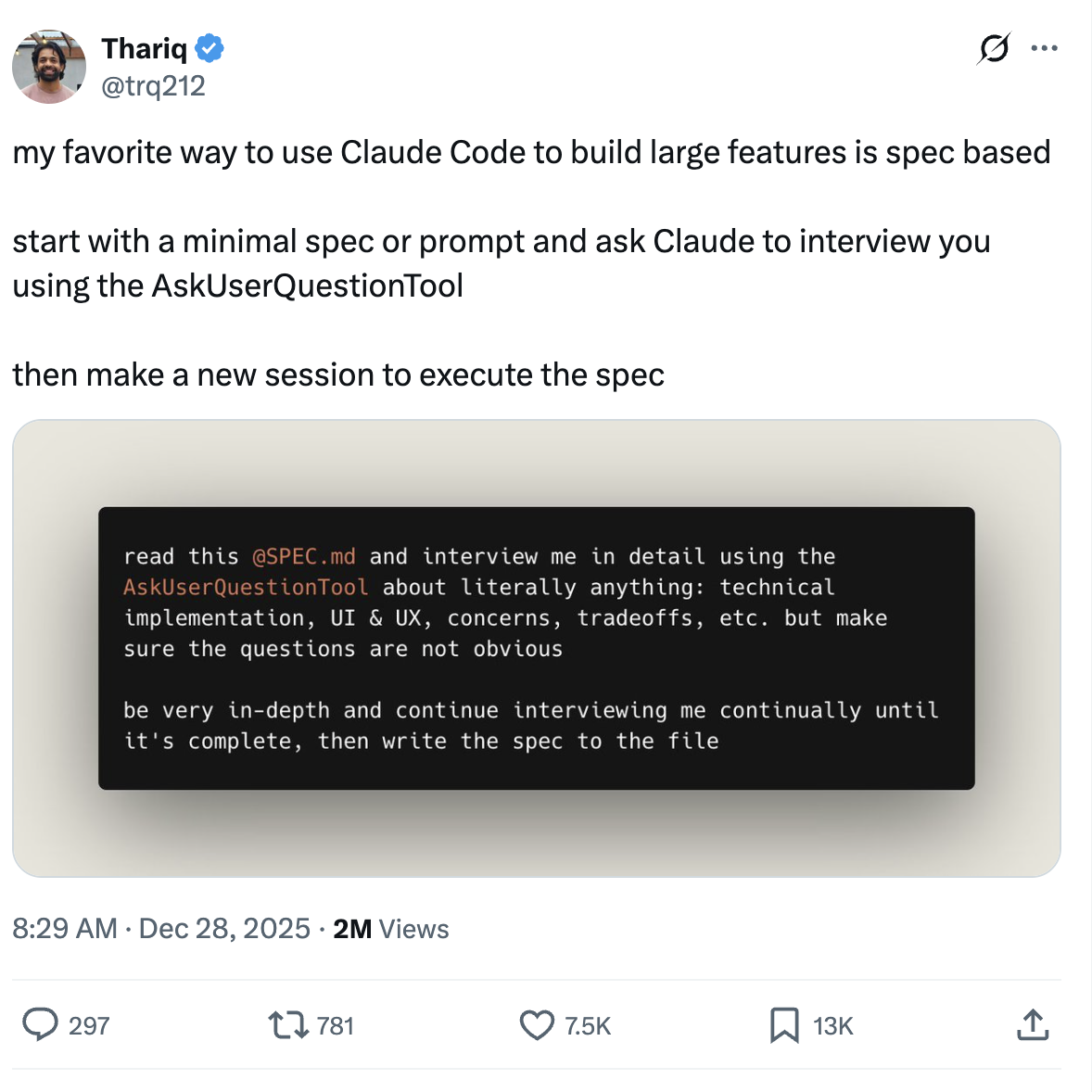
Don't just listen to me, here's a post from a developer that works on Claude Code:
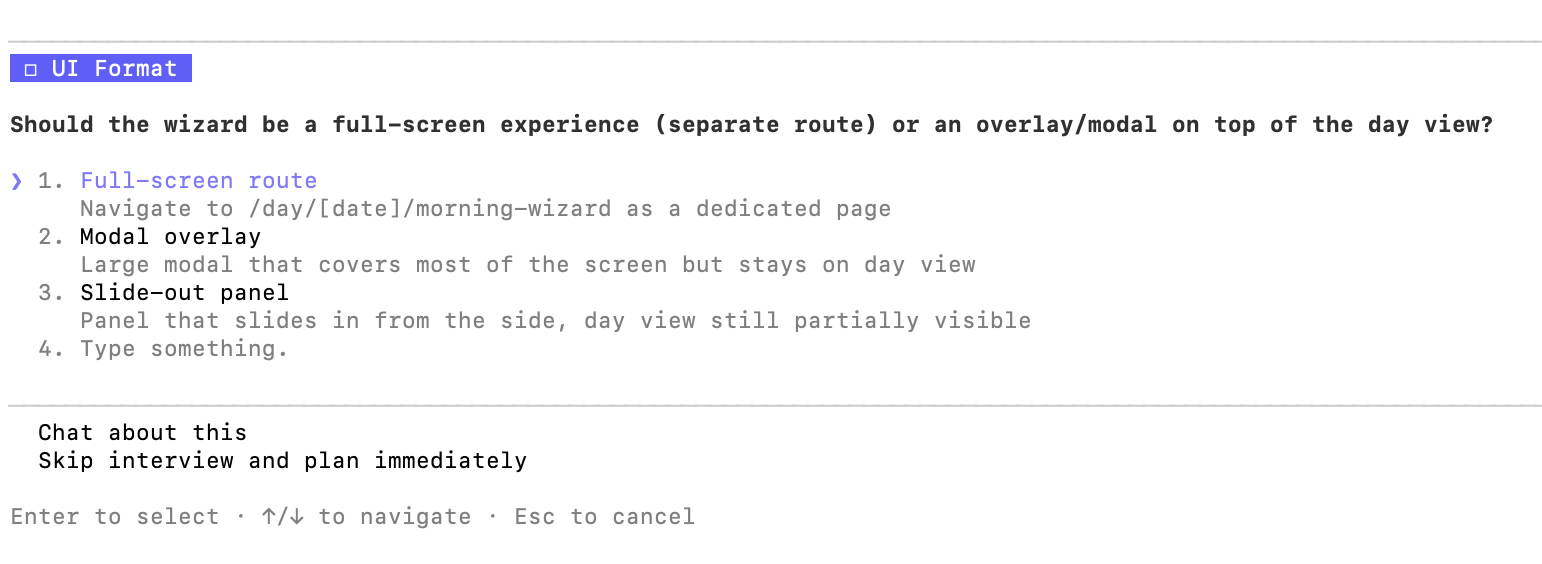
What is AskUserQuestionTool?
- It's a tool that interrupts the conversation and asks you questions.
- Supports either Select or Multiselect
- Always has default options you can select (saves time from typing)
Why It Matters
Context is the most important thing in coding agents. In fact, it's the only thing that allows your coding agent to perform well.
If it doesn't know what a file's content is, how could it edit the file?
If it doesn't know what the users request is, how could it build the right thing?
For example, look at the difference between these two prompts:
This will result in VASTLY different action taken by the coding agent which will result in very different code.
But... it's also a lot of work to properly type out a comprehensive prompt. And, even then you may still forget stuff.
Instead, you can use an LLM (which essentially has a condensed version of all of the knowledge of the internet) to analyze what context you've given so far, and interview you for what's missing for it to do its work.
How To Use
-
Include "AskUserQuestionTool" in your prompt instead of just "ask me questions" for consistent results.
-
Add "one by one" so the coding agent will think in-between answering questions to pick the next best question. Otherwise Claude may ask you up to 5 questions at once, and often after you answer the first 2-3, the rest are outdated or irrelevant.
-
Be specific about default answers. This is optional, but helpful when you need certain information to make a choice. For example, when asking about infrastructure choices, instruct Claude to include the price for each option.
-
Trigger questions dynamically as the agent works. For example: "Find every blog article we've published, read it, then suggest new optimized titles to me with AskUserQuestionTool. Update the article with the new title. Repeat for every article."
7 Ways I Use AskUserQuestionTool
1. Better Feature Requirements
When I enter plan mode, I give Claude the general idea and ask it to interview me before creating the plan.
How it works:
- Put Claude in plan mode (Shift+Tab to cycle modes)
- Describe your feature at a high level
- Ask Claude to interview you with X questions via AskUserQuestionTool
I want to add user authentication to this app.

Before creating a plan, interview me with 6 questions one by one via AskUserQuestionTool to understand my requirements.2. Create or Update Commands, Skills, and Sub-Agents
Instead of trying to write the perfect skill definition, let Claude ask what you need.
How it works:
- Tell Claude what you want to create or update
- Ask it to read the existing file first (if updating)
- Have it interview you before making changes
I want to create a new code review sub-agent.

Read my existing sub-agents in .claude/agents/ for reference, then interview me with 5 questions one by one via AskUserQuestionTool about what I want this reviewer to focus on.3. Align on Tech Stack
Once you have requirements, let Claude propose technology options through structured questions.
How it works:
- Share your project requirements
- Ask Claude to propose tech stack options via AskUserQuestionTool
- Get clear tradeoffs for each choice
I'm building a real-time dashboard app. Here are the requirements: [paste requirements]

Propose tech stack options to me one by one via AskUserQuestionTool. For each decision (frontend framework, state management, data fetching, etc.), give me 3-4 options with tradeoffs.4. Create a Comprehensive PRD
Writing a full PRD from scratch takes forever. Let Claude interview you instead.
How it works:
- Voice dictate or type out your rough idea
- Ask Claude to interview you to fill in the gaps
- Get a polished PRD at the end
You are an expert PRD creator and product designer.

Here's my rough idea: [paste your notes]

Interview me with 8 questions one by one via AskUserQuestionTool to gather the context you need, then create a comprehensive PRD.5. Update CLAUDE.md Based on Frustrations
Did you just spend 20 minutes correcting Claude? Turn that frustration into a permanent fix.
How it works:
- After a frustrating back-and-forth, ask Claude to analyze what went wrong
- Have it propose CLAUDE.md changes via AskUserQuestionTool
- Pick the fixes that make sense
You are an expert AI agent designer.

Read our CLAUDE.md file and look back at this conversation. Identify what went wrong and propose changes to prevent it.

For each proposed change, use AskUserQuestionTool to give me options on how to fix the behavior.6. Plan Project Documentation
Instead of guessing what docs to write, let Claude interview you about what's actually needed.
How it works:
- Ask Claude to analyze your project structure
- Have it propose documentation priorities via AskUserQuestionTool
- Get docs that actually matter
Analyze this codebase and identify what documentation would be most valuable.

Interview me with 5 questions one by one via AskUserQuestionTool about our documentation needs, then create a prioritized list of docs to write.7. Brainstorming
Instead of Claude picking one approach, have it generate multiple options and let you choose.
How it works:
- Describe what you're trying to build or decide
- Ask Claude to generate several options
- Have it present them via AskUserQuestionTool so you can pick
I need to add a user settings page to this app.

Suggest 5 different design approaches for this feature, then present them to me with AskUserQuestionTool so I can pick the direction.Start Here
AskUserQuestionTool turns Claude into an interviewer that fills your context gaps automatically. No more guessing what details to include in your prompts.
Pick one use case from this list. Try it on your next feature. You'll never go back to writing comprehensive prompts from scratch.
My recommendation: start with feature requirements (#1). Next time you're planning a feature, ask Claude to interview you before creating the plan. See how different the output is.
Want more like this? Get my best AI tips in your inbox.

AI DevX Engineer at SurePath AI. Former Amazon engineer. I write about using AI effectively for work.
Recommended Articles
The Agentic Loop: Stop Babysitting Your Coding Agent
The more your agent can run code and feed output back to itself, the less you do. Learn how to close feedback loops and let your coding agent iterate autonomously.
Your Coding Agent Can Upgrade Itself
When your coding agent makes a mistake, use that moment to upgrade the agent, with the agent itself. One sentence, 30 seconds, permanent fix.
My Claude Code Workflow for Building Features
A structured workflow for using Claude Code with sub-agents to catch issues, maintain code quality, and ship faster. Plan reviews, code reviews, and persistent task management.